


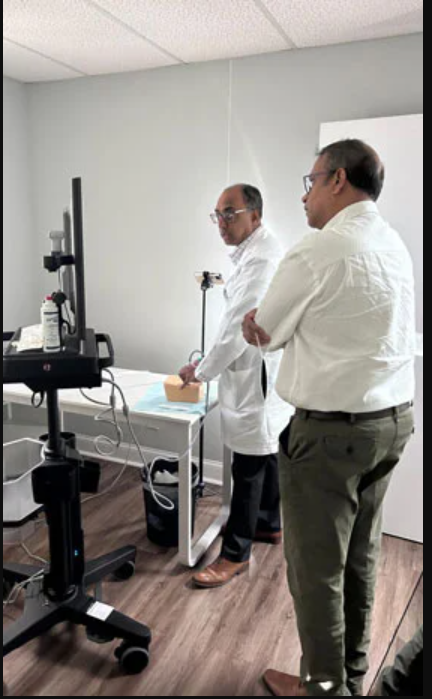
When a patient presents with a herniated, or "slipped," disc, spine surgeons prioritize a graduated approach that focuses on restoring function and alleviating nerve compression. The treatment journey typically begins with conservative management, as many disc herniations are self-limiting and resolve with targeted physical therapy, non-steroidal anti-inflammatory medications, and activity modification. These methods allow for the natural resorption of the herniated disc material, often eliminating the need for invasive intervention.
However, when conservative measures fail to provide relief or if the patient experiences progressive neurological deficits—such as significant muscle weakness, sensory loss, or bowel/bladder dysfunction—surgical intervention becomes necessary. In these instances, modern spine surgery emphasizes minimally invasive techniques to achieve decompression while minimizing disruption to the surrounding musculature. Procedures such as a microdiscectomy are highly effective; the surgeon utilizes microscopic visualization to precisely remove only the portion of the disc that is impinging upon the spinal nerve.
This refined approach significantly reduces postoperative pain and facilitates a quicker recovery compared to traditional open surgeries. By identifying the specific root of the mechanical compression and utilizing advanced surgical technologies, spine surgeons are able to stabilize the patient’s condition and restore long-term quality of life. The ultimate objective is not merely to address the structural abnormality, but to provide a durable, evidence-based solution that returns the patient to their baseline activity levels with minimal downtime. Through a combination of precise diagnostics and surgical expertise, specialized Spine Surgeon NJ ensures that even complex disc issues are managed with predictable, high-quality outcomes.

 English
 Arabic
 French
 Spanish
 Portuguese
 Deutsch
 Turkish
 Dutch
Dutch
 Russian
 Romaian
 Portuguese (Brazil)
 Tiếng Việt